Building Higher Trust 93 Reinforce Trust Behaviors

October 7, 2022

Reinforce the behaviors that enhance trust within your organization. You need to encourage people to use these behaviors more often. Doing so will cause more people to practice them, and you will move your entire organization toward higher trust.

Reinforcement lesson from literature

In his book “Whale Done,”  Ken Blanchard stresses an idea about reinforcement. If you want more of a certain behavior, you need to reinforce the people who do it.  The idea is to catch someone doing something right and make them feel good about it.

Application to trust behaviors

The positive reinforcement technique is particularly effective at enhancing trust within organizations.  Leaders should preach and model the technique to shift the culture toward higher trust.

Examples of trust behaviors for clarity

Let’s focus on some examples that help illustrate how powerful this technique is at shaping the culture of a group. Here are six behaviors to reinforce:

  1. Admit mistakes – When people humbly admit a mistake, it usually enhances trust rather than reduces it. The reason is that many people try to hide their mistakes to avoid embarrassment. Exceptions include if the same mistake has been made before or if the mistake has a sinister intent.
  2. Do what you say – Consistency between words and actions is a way to enhance trust.
  3. Tell the truth – People recognize when they get straight facts, even if the news isn’t good. They appreciate the honesty.
  4. Be transparent – People appreciate knowing what is going on. If managers try to hide things, trust goes down.
  5. Demonstrate care – When managers show they truly care about their people, it goes a long way toward enhancing trust.
  6. Adhere to the values – If people see the values modeled in everyday interactions, it helps entrench their validity.

There are hundreds of other examples I could cite, but I kept the list short for brevity. The point is that when leaders reinforce people when they do things that enhance trust, it tends to strengthen it.

Trust behaviors form the basis of your culture

Do not overlook this method of enhancing trust within your group. Look for opportunities to model the technique.  Don’t forget to thank other people when they take the time to praise others who are reinforcing trust behaviors.  The whole concept becomes a circle of support that really matters in the long run. It is the best method of building a high trust culture.

Bob Whipple, MBA, CPTD, is a consultant, trainer, speaker, and author in the areas of leadership and trust.  He is the author of The Trust Factor: Advanced Leadership for Professionals, Understanding E-Body Language: Building Trust Online, and Leading with Trust is Like Sailing Downwind.  Bob has many years as a senior executive with a Fortune 500 Company and with non-profit organizations


Building Trust 92 Honor Commitments

September 30, 2022

It sounds so simple to say, “honor commitments if you want to build trust.” In today’s environment, most leaders are over-committed. This condition can lead to mistakes and omissions, which lowers trust.

Following up on commitments is essential, but sometimes neglected by busy leaders.  It is easy with good intention to say, “I’ll get back to you on this.” Then, in the chaos of more critical issues, you forget to do it.

Don’t let yourself off the hook

You may rationalize and say, “Well, it wasn’t really a promise and they know how busy I am. This is only a minor issue anyway.” That kind of thinking will harpoon your trust-building efforts. If building trust is all about consistency, nothing is more basic than doing what you say.

Whenever you make a commitment, no matter how small, make sure you do it. Here are five tips that can improve your performance in this area.

How to follow up on commitments effectively:

  1. When you promise something, put a time frame on it. Rather than “I’ll get back to you,” say, “I’ll get back to you by the end of tomorrow. If I get derailed and you don’t hear from me by then, please give me a call.” The person knows you really do intend to answer their question.
  2. Keep an action item list. Whatever form, a 3″x5″ card or a phone, get the item down along with a promised time frame. It helps to write it in front of the person with the concern. You can say, “Just a second – let me jot that down so I don’t forget.” The person feels honored that you are considering the issue strongly enough to document it.
  3. If you delegate the issue to another person for follow-up, make sure they follow two rules. Start with, “Bob asked me to get back to you on this question.” Also, make sure your agent confirms with you when it is done. Cross it off your list when your agent tells you it is closed. In some cases, you should circle back to the person with a note or call. “I asked Mike to get back to you on your concern about the slippery floors. Did you hear from him and was his response satisfactory?” Doing that gives you the opportunity to jack up any agents that shirk their duty. 
  4. In a staff meeting, you can say something like, “If I ask you to act as my agent, be sure to do it. I expect you will keep working on it until you resolve the situation satisfactorily for the employee. If you can’t resolve their concern, get back to me. Don’t let it drop.”
  5. Use handwritten notes or texts to people. A brief note, along with a “thank you for bringing this up,” will be appreciated. Be careful to use a tangible note only when the response is positive and difficult to misinterpret. Otherwise, you may find your note tacked to the break room bulletin board next to a Dilbert cartoon. For difficult issues, it is always best to deal face-to-face.

Closure on action items is not only for personal discussions. The same logic holds when you promise something to a group. If you say, “I will make a decision on overtime by noon,” make sure they hear from you on that schedule. It is important to state a deadline or things tend to stretch out.

You may think a week to unveil a new organization is reasonable. For some people it feels like, “he promised to do something about that but never got back to us.”

Conclusion

Set a personal expectation that you will always be prompt and helpful with getting back to people. Think of it as a personal trademark that will set you apart from some other leaders.

This is not to say that you need to resolve every issue in the originally expected time frame. That would be impossible. Just do not leave people hanging wondering why you are not addressing their concerns. It is a common courtesy that many leaders neglect.


Bob Whipple, MBA, CPTD, is a consultant, trainer, speaker, and author in the areas of leadership and trust.  He is the author of The Trust Factor: Advanced Leadership for Professionals, Understanding E-Body Language: Building Trust Online, and Leading with Trust is Like Sailing Downwind.  Bob has many years as a senior executive with a Fortune 500 Company and with non-profit organizations


Building Higher Trust 91 Too Many Meetings

September 23, 2022

In many organizations, the standard paradigm for meetings means the people feel there are too many meetings. The null hypothesis on meetings is that they are one hour in duration. Let’s say a manager sends a text to her administrative assistant to schedule a meeting.  He will assume the duration is one hour unless told otherwise.

We still use the old convention

We come by this paradigm through convention, and it is an opportunity to challenge the status quo. Suppose the administration person scheduled the meeting for 44 minutes. What would be the outcome? 

In most organizations, it would mean that everyone invited to the meeting saved about 15 minutes. As a side benefit, the 44 minutes spent at the meeting would be far more productive. It is because we set aside the standard paradigm. People got the message that every minute is important.

Improve time utilization

There are numerous things that can be done to improve the time utilization at meetings, Here are nine of my favorite techniques;

Nine Antidotes:

  1. Suggest that the person leading the meeting be extremely mindful of the duration. Our time at work is precious because it is finite.
  2. Shock people into a realization of what is actually happening:  Set up the meeting to start at 2:20 pm and end by 2:50 pm. That would be a 30-minute meeting.
  3. Put a premium on how we spend time in meetings. Make sure the agenda is specific as to time devoted to each topic and stick to that schedule. Have a person assigned to keep things on track.
  4. Acknowledge the need for important side issues, but do not let them derail the meeting.  Handle them efficiently or find another venue to deal with them.
  5. Start and end each meeting on time.  Become known as a stickler for this. It is not polite to others to arrive late for meetings. It is also not polite to attendees for the leader to extend beyond the advertised finish time.
  6. Have a set of expected behaviors for your meetings and post them. Hold each other accountable for abiding by these rules.  
  7. Have some time set aside in each meeting to reinforce good behavior. Feel good about things that are going well. If we spend 100% of our time dealing with the bad stuff, we will never smell the roses.
  8. Agree to disagree. You do not need to wrestle every disconnect to the ground. Move on.
  9. Settle differences outside the meeting environment.

Conclusion

All these rules are common sense. It is too bad they are not common practice, because they help preserve our most critical resource: our time.

Bob Whipple, MBA, CPTD, is a consultant, trainer, speaker, and author in the areas of leadership and trust.  He is the author of The Trust Factor: Advanced Leadership for Professionals, Understanding E-Body Language: Building Trust Online, and Leading with Trust is Like Sailing Downwind.  Bob has many years as a senior executive with a Fortune 500 Company and with non-profit organizations


Building Higher Trust 90 Trust Improves Communication

September 16, 2022

Improved Communication is a common denominator of a culture of high trust.

Have you ever been in a situation where you had to choose words very carefully? It probably felt like you were on a tightrope.  This feeling is indicative of a low trust situation where communication is tedious at best.

In this hostile environment, people are ready to pounce on any opportunity to misinterpret or bend whatever you say.  You must be hypersensitive to every word and inflection to avoid people misreading your intent. In a virtual situation, it is even more difficult because body language cues are more limited.

The advantage of trust

Once you achieve an environment of trust, all forms of communication become easier.  Big mistakes are rare. Any small communication glitch will surface and be dealt with before it becomes an issue. You can relax and be yourself in all your communications.

Imagine the freedom of not having to guard everything you say. In an atmosphere of real trust, people are not coiled like snakes waiting for a false step. If something comes out wrong, people will tell you. You can apologize and know your apology was accepted by their body language.

In areas where trust is high, you can see lots of evidence of it. Groups that have high trust act and react differently from those with lower trust levels. There is an esprit de corps among people. They laugh more and seem to have a great time being together. They sometimes have problems just like everyone else, but they climb over them quickly and move on. 

Body Language

The body language in these groups is one of love and support for one another.  People will not tolerate backbiting or badmouthing.  Respect is on their faces.  They volunteer to help each other willingly and go out of their way to be kind. 

When they describe their improvement programs, they beam with pride. People are truly engaged in the efforts to improve.

If you walk into a conference room full of people with high trust, it takes only a few seconds to sense it.  People don’t even have to talk. Goodwill is in the air.

Unfortunately, even in the best groups, things are not amicable all the time. Occasionally, there will be setbacks and problems to overcome. In a culture of high trust, problems can turn into opportunities.

Getting past problems 

A hallmark of a trusting environment is that letdowns don’t impact the climate very long.  Human beings are fallible. No two people can work in close proximity without one letting the other down eventually. Remote work situations are especially susceptible to misunderstandings.

In an atmosphere of high trust, a lapse will trigger a discussion that is open and honest. The exchange will be laced with love rather than doubt or anger. The bad feelings did not have a chance to escalate.  The existence of a gaff only ends up enhancing the relationship because you extinguished the problem so quickly.

The flip side 

If the atmosphere is one of low trust, everything said will go through a filter of doubt. If a point is misinterpreted, chances are it will lead to rancor. Trying to communicate in low trust is like trying to walk yourself out of quicksand. You can make all the right moves, but the reality is you are going backward.

Improvements are easier

In an atmosphere of high trust, you get tremendous progress from improvement initiatives because any disconnects will quickly surface. This avoids pursuing a mechanical improvement program that lacks support from all constituents.

The suggestions offered here will work, provided there is good consensus among the team. Test for this commitment often and don’t operate in a vacuum. This is especially important in a virtual or hybrid situation. Do not let a lack of physical presence destroy the beneficial culture of trust.

Conclusion

Work on a culture of higher trust and openness.  People really appreciate the ability to speak their mind and not have to worry about others misinterpreting their intent. The benefits are obvious.


Bob Whipple, MBA, CPTD, is a consultant, trainer, speaker, and author in the areas of leadership and trust.  He is the author of The Trust Factor: Advanced Leadership for Professionals, Understanding E-Body Language: Building Trust Online, and Leading with Trust is Like Sailing Downwind.  Bob has many years as a senior executive with a Fortune 500 Company and with non-profit organizations


Building Higher Trust 89 The Trust Button

September 9, 2022

What if there was a magic “Trust Button” that leaders could hit any time they wanted to increase trust? Ask yourself this question.  How many leaders do you know who would use the button if they knew about it?  The good news is that the button is available to all leaders, and it is FREE. All it takes is a change in the leader’s behavior to enjoy the benefits of higher trust.

Numerous possible actions

There are hundreds of actions that leaders can do to increase trust.  I do an exercise in my seminars. Groups can think up more than 50 things in just a couple minutes of time. I contend that there is just one action that rises above the rest when it comes to creating trust.  The reason comes from nearly forty years of studying the phenomenon both as a leader and as a consultant.  

The most important enabler of trust

I believe that psychological safety is the magic button to create strong trust. Leaders who understand this concept and how to achieve it have a significant advantage in creating trust.  They are also more effective at maintaining and repairing trust. Let’s take a closer look at why this simple concept is so powerful.

Psychological safety is the belief that you won’t be punished for speaking up with ideas, questions, or concerns. Unfortunately, many work cultures do humiliate or punish people who speak up. Physicological safety is very low in these groups and the growth of trust is snuffed out.

Reinforcing Candor

I believe the culture of any organization is established from the top.  It is the behaviors of leaders that set the tone for how people are treated. If people who dare to give their candid feelings are punished by the leader, then trust will not grow.

That is why I preach that the trust button is activated when leaders “reinforce candor.” It is easy to understand how this would work Unfortunately, it is extremely difficult for many leaders to accomplish it.

Why Leaders have a difficult time reinforcing candor

Leaders are saying and doing things every day that they believe are right. It is almost impossible to do things that you truly believe are wrong. The leader feels justified in every decision, statement, email, or other means of sharing ideas.

If an underling makes a statement that questions the rightness of a decision, the leader will become defensive. In defending the original decision, the leader ultimately punishes the employee. Trust is trashed in the process.  If you report to a leader who cannot reinforce candor, you learn to remain silent.

I believe that dynamic is the root cause of why leaders have a hard time pushing the trust button. I teach leaders to modify their behavior to reinforce candor and make people glad they brought it up. Some leaders are able to modify their behavior accordingly in most cases.  Those leaders are able to enjoy the benefits of a high-trust organization.

What are the benefits?

If you have a high trust group EVERYTHING works better. Productivity is generally 2-3 times as high as a low trust group.  Turnover is very low or zero.  People have more fun. The quality of work and engagement of people shoot up.

Conclusion

Try shifting from a culture of fear to one where people are reinforced when they bring up concerns. The difference in performance will amaze you.   


Bob Whipple, MBA, CPTD, is a consultant, trainer, speaker, and author in the areas of leadership and trust.  He is the author of The Trust Factor: Advanced Leadership for Professionals, Understanding E-Body Language: Building Trust Online, and Leading with Trust is Like Sailing Downwind.  Bob has many years as a senior executive with a Fortune 500 Company and with non-profit organizations


Building Higher Trust 88 Trust and The Great Resignation

September 2, 2022

Lack of trust is strongly correlated to The Great Resignation that started in 2021 and continues today. Many leaders took a wrong turn in 2020, and it is costing them dearly years later.  I suspect most leaders could not articulate the wrong turn, so what chance do they have of reversing it? They lowered trust by increasing the “command and control” logic in response to many people working from home.

The old paradigm

Prior to the pandemic, the working world experience was the same for most people.  You got up, got dressed and fed, went to work, and arrived on time. All those actions were part of the daily routine for most people. It was expected behavior, so we all complied with various degrees of discipline. If we went too far off the beam, then there were negative consequences.

Abrupt change for most people

That pattern changed in March of 2020. Most of us now stayed home and did our work in a different setting.  We were forced to work with distractions that were not there before. Other family members’ needs were distractions. Even pets could be the cause for loss of concentration. We interfaced with each other using computers. The most common phrase in meetings became “You’re on mute.”

A  wrong turn

In this environment, many leaders decided that additional controls were required to maintain reasonable productivity. The classic “command and control” mechanisms that were in place before the pandemic were not adequate. Here is where the wrong turn happened. To feel comfortable, many managers resorted to tracking methods to ensure they were getting the full attention of their employees.

Lower trust

The tracking methods took many forms, from tracking computer keystrokes to frequent phone calls. All of the verification steps sent the same signal. People felt lower trust on the part of management. Perhaps they tolerated the abuse, but it left deep scars in the relationship with their leaders. Those scars are what triggered the Great Resignation.

An extreme example was the use of pecking bird toys. They would hit some keys every 30 seconds or so while the employee was in the bathroom. There were other extreme ploys that allowed employees to appear like they were working.

People started playing games

The lack of trust is what led people to adopt a “fool the clueless boss” mindset.  That feeling was the genesis of the Great Resignation. When people stopped and thought about all the Mickey Mouse rules, they became offended. They were willing to work in return for a living wage, but not at the expense of their dignity. Numerous workers decided the tradeoff was not worth it.

Forced Vaccinations

Some companies overstepped by forcing employees to get injected with experimental products. Many people quit rather than take a risk with unapproved substances. Some of the people who did comply had serious side effects and quit for that reason. The result was more strain on the labor shortage issue which had a negative impact on morale.

Bucking the trend

Some leaders did not fall into the trap. They expressed trust for their employees and showed empathy for them with the things they said and did. Most importantly, it was how things were presented to employees that conveyed real care and empathy. Those leaders actually enhanced trust in the time of great turmoil.

Conclusion

Leaders who tried to increase control during the turbulent COVID situation actually ended up losing more control. Those who were more inclined to trust their employees and showed it ended up as the winners.


Bob Whipple, MBA, CPTD, is a consultant, trainer, speaker, and author in the areas of leadership and trust.  He is the author of The Trust Factor: Advanced Leadership for Professionals, Understanding E-Body Language: Building Trust Online, and Leading with Trust is Like Sailing Downwind.  Bob has many years as a senior executive with a Fortune 500 Company and with non-profit organizations


Building Higher Trust 87 Trust Requires Constant Attention

August 26, 2022

Several aspects in life require constant attention.  Love is a perfect example of this philosophy. You can never assume you have enough love and can stop investing in it. The minute you let your guard down you are in danger of losing momentum. It is not a burden to invest in love because the benefits are foundational to life.

Trust has the same characteristic as love

Because trust is transactional, you should never assume that your investment in it is no longer needed. In other articles, I have likened trust between people to be similar to a bank account. There is a current balance, and we make deposits and withdrawals on a regular basis. My observation is that trust is easily gained in small deposits. It can also be lost in large or small withdrawals.

The reason we rarely make huge deposits in the trust account with people is due to the nature of the deposits.  It takes a special situation to create the opportunity for a mega deposit in trust.  The example I often use is if you have to land a plane in the Hudson River.  There are more everyday situations that might constitute an opportunity for a large deposit. 

Example of a large trust deposit

Suppose you were on an overnight business trip. You have just retired after an exhausting day with a client.  Your cell phone rings. It is a supervisor from your plant informing you that there was a small fire on one machine. The entire shift was forced to evacuate at night. Of course, you express your shock and concern. You might decide to get out of bed and drive four hours to get to the plant in person. That would constitute a large deposit in trust.

Going out of your way to show you care is a good way to build trust quickly.  On the withdrawal side, it is easy to have a small withdrawal become huge rather quickly.

People read your body language

When you interface with people, they instinctively read your true feelings based on your body language. Especially hurtful to trust is when your body language does not agree with what you say. Certain quick and small gestures called “micro-expressions” can give away your true feelings when talking with people. It may be just a slight roll of the eyes or a pull of your cheek to one side. It can have huge implications.

Authenticity is the antidote

The way to stay out of trouble with body language is to ensure you are 100% authentic with people.  Your gestures and words are always consistent, and people come to expect that of you. An important component of being consistent is to watch your private self-talk. Never allow yourself to lapse into an unhealthy private attitude toward a person. The disconnection will eventually be evident to people.

Conclusion

Maintaining trust requires constant attention and care.  Practice the art of being transparent and genuine with people and your track record will improve with time. 


Bob Whipple, MBA, CPTD, is a consultant, trainer, speaker, and author in the areas of leadership and trust.  He is the author of The Trust Factor: Advanced Leadership for Professionals, Understanding E-Body Language: Building Trust Online, and Leading with Trust is Like Sailing Downwind.  Bob has many years as a senior executive with a Fortune 500 Company and with non-profit organizations


Building Higher Trust 86 Ten Aspects of High Trust Groups

August 19, 2022

Ten aspects of a high trust group are easy to witness. I have seen groups accomplish a doubling of productivity in less than 12 months.
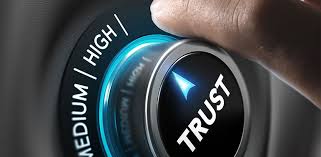
Shift from a command-and-control environment to one of high trust. Your organization will achieve remarkable gains in productivity.

I have a little exercise that I use to engage groups in my seminars and leadership classes. I lay out ten dimensions and ask small groups of participants to analyze each dimension. I have them contrast what it is like for high trust groups versus low trust groups.

Ten aspects of trust and a brief observation on each one

  1. Solving problems – High trust groups solve problems quickly and easily. They also come up with more creative solutions because members are more open.
  2. Group focus – Groups with high trust focus on the vision and what is important now. Low trust groups are more myopic and focus on each other most of the time. There is often a lot of acrimony.
  3. Communication – In high trust groups communication is efficient and believable. When operating in a low trust environment, there is a lot of skepticism.
  4. Customer Retention – Customers interfacing with high trust groups see the esprit décor between people. Those customers will return for more.
  5. Environment – The environment of a high trust group is real. In low trust situations, people play games with each other.
  6. Saving Time – Less time is wasted in a high trust group because there is less bickering. Productivity is normally at least twice as high as low trust groups.
  7. Perfection Not Required – Leaders do not need to be perfect in high trust groups. In low trust environments, people are ready to spring on any potential misstep.
  8. Growth – High trust groups spend more time developing their people to be their best.
  9. Reinforcement – When leaders reinforce a high trust group people are grateful. In low trust situations, reinforcement is met with skepticism that there is an ulterior motive.
  10. Positive Atmosphere – Going to work in a high trust organization is fun. Working in a low trust situation is a constant battle.

Conclusion

These are just ten aspects for why high trust groups always outpace their lower trust counterparts. You can probably think of several other categories.  The conclusion should be obvious. If you have achieved the status of a high trust organization, your success much more likely.


Bob Whipple, MBA, CPTD, is a consultant, trainer, speaker, and author in the areas of leadership and trust.  He is the author of The Trust Factor: Advanced Leadership for Professionals, Understanding E-Body Language: Building Trust Online, and Leading with Trust is Like Sailing Downwind.  Bob has many years as a senior executive with a Fortune 500 Company and with non-profit organizations


Building Higher Trust 85 Trust is Not a Singular Concept

August 12, 2022

Trust is not a singular concept in nature. I have studied trust for several decades, teach it in several settings, and written four books on it. Trust is such a common word that we use it numerous times a day without thinking. Just listen to the advertisements on TV and you will hear the word trust in the majority of them.

Trust is much broader than we think

Many people have a misconception about the concept of trust. They think of trust as a singular concept when using the word in daily conversation. They picture it as a kind of bond between them and another person.  It takes on a singular connotation. Either they trust another person or do not trust him or her at some level right now.

Trying to define the word

The way I get groups to think about trust more deeply is by asking what the word means. There is always a pause and awkward silence for a few seconds as people try to define it.  Then, someone will offer that trust is the confidence that another person will perform in a certain way.  Someone else will chime in that trust is taking a risk that they could be disappointed.  A third person will add that trust is about having shared values. Then someone will add that trust is having their back or sticking up for them. Once the ball gets rolling, a group can come up with a couple dozen definitions of trust quickly. 

Trust is ubiquitous

Now the group is ready to entertain the idea that trust is a multi-faceted concept. It exists not only between people, but with organizations, products, services, and all kinds of systems.  People get the idea that trust is ubiquitous and is all around them in every moment of their day.  They recognize that before they get to work in the morning, they have experienced trust several hundred times. 

We trust systems to work

They walk into the bathroom and turn on the lights. They trust the whole system to provide light. They don’t think about where the electricity is coming from unless there is some kind of rare failure. 

They turn on the water and just expect potable water to come out without any problem. If it is the left faucet, they trust that the water will become warm, then hot with time.  By the time they reach the breakfast table, trust is experienced dozens of times; then things get really complicated. 

Medications require trust

At breakfast, they are confident that the vitamin pill they are taking is safe. They have no idea who made the pill and what ingredients went into it.  They just swallow the pill and expect it to help. 

In the car

They get into their car and turn the ignition key.  Now, inside the engine, there are thousands of explosions each minute that allow the car to move. They peacefully enjoy the classical music on their favorite station and crank up the air conditioning. 

They have no worry when they press down on the brakes that the car will stop.  They drive over numerous bridges and overpasses without blinking an eye. They do not think of the consequences if the structure would become unsafe. 

Just a few examples to illustrate

On it goes all day every day that they simply take for granted things will work as designed. They recognize on occasion things might fail for some obscure reason. The failures are so remote that they put them out of their mind unless something unusual is going on. Now let’s focus on how trust between people is built and lost for all of us.

In general, we all focus our conscious energy on trust in the relationships we have with other people. Often we forget about the transactional nature of trust. It is impacted by everything (seen and unseen) that happens between people. 

Trust is always bilateral

Trust is bilateral. I trust you and you trust me at some level, and the levels are not the same.  Something happens, and I may trust you more while you trust me less.  The whole thing is dynamic and constant. Most of the trust interactions are going on in our subconscious minds. We have a kind of score card in our mind that is like the balance in a bank account.

A bank account

Many authors, including me, have likened trust to a bank account. We have a balance, and we make deposits and withdrawals. The size of the deposit or withdrawal will vary depending on what is happening. The transaction may be totally subconscious. We can make a huge withdrawal of trust with another person and be totally oblivious to it. 

A few years ago I built a model that helps people visualize this trust account and how it works. I call it my “Trust Barometer” and show it at all my programs. People really get the message about how trust works very easily. Here is a link to a Trust Barometer Video (6 minutes) about how trust is built and lost. Take a peek at this fun description and see if it helps you picture the nature of trust in your life.

Conclusion

Trust is more complex and ubiquitous in our lives than we realize.  Try to be more aware of this aspect of trust. You can see it working for you more consciously on a daily basis. It is fun, and it certainly is an eye-opener.


Bob Whipple, MBA, CPTD, is a consultant, trainer, speaker, and author in the areas of leadership and trust.  He is the author of The Trust Factor: Advanced Leadership for Professionals, Understanding E-Body Language: Building Trust Online, and Leading with Trust is Like Sailing Downwind.  Bob has many years as a senior executive with a Fortune 500 Company and with non-profit organizations


Building Higher Trust 84 The Transactional Nature of Trust

August 10, 2022

To experience maximum trust with people we know, we need to be aware of the transactional nature of trust. Everything that happens between us will have some impact on the level of trust.

It is important to build trust constantly through our words and deeds. Sometimes we will encounter a loss of trust. We need the equity of past trust-building transactions to withstand an inevitable letdown. Here is a true story from my past that included a trust transaction.

Exchange with a subordinate

George came into my office and closed the door.  He was a manager reporting to me, and we had a relationship of high trust. My division recently combined with another division to form a larger organization. George started to tell me some unflattering things about one of the managers I was inheriting.

Rather than my trust in George going up, it went down that day because he was undermining a peer.  I told him that I would rather not deal in gossip. It was better to give the new manager a chance to start out with a clean slate.

How trust transactions work

As we interface with people in daily activities, our level of trust with them goes up or down constantly. Trust increases or decreases depending on the transactions happening between us. This adjustment includes email, phone calls, and even body language in a meeting. Any interface creates an opportunity to modify the level of trust.

Exercise for you

Seek to pay more attention to the transactions you have with other people today. Notice the small things that happen which have a positive or negative impact on trust. Learn to read the body language of others. It allows you to read when something you have said has made the level of trust go down.

Conclusion

Trust is never static. It is always moving depending on our assessment of the Five C’s of trust. They are:

  1. Character
  2. Consistency
  3. Competence
  4. Congeniality
  5. Care

We can witness these things easily in other people, and it is the basis for the trust level we have. Also, realize the other person is making similar judgments of us. Trust is an ever-moving target. Make sure you are always doing things to build rather than destroy trust with other people.


Bob Whipple, MBA, CPTD, is a consultant, trainer, speaker, and author in the areas of leadership and trust.  He is the author of The Trust Factor: Advanced Leadership for Professionals, Understanding E-Body Language: Building Trust Online, and Leading with Trust is Like Sailing Downwind.  Bob has many years as a senior executive with a Fortune 500 Company and with non-profit organizations